Unmanned Ground Vehicle

One of our first products funded by our angel investment round. Helped us secure acceptance into a Canadian military program and Creative Destruction Lab, a Canadian accelerator.
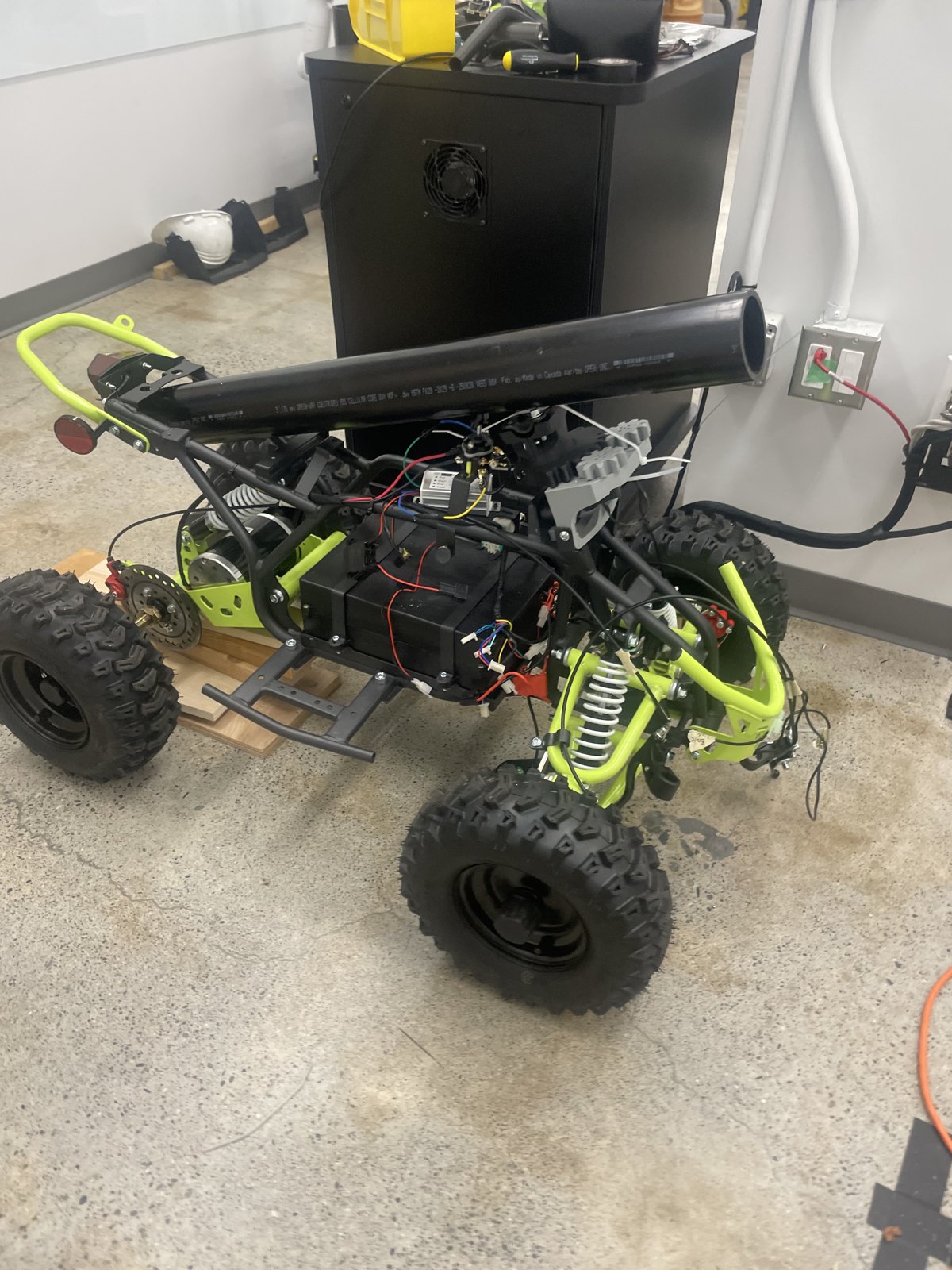
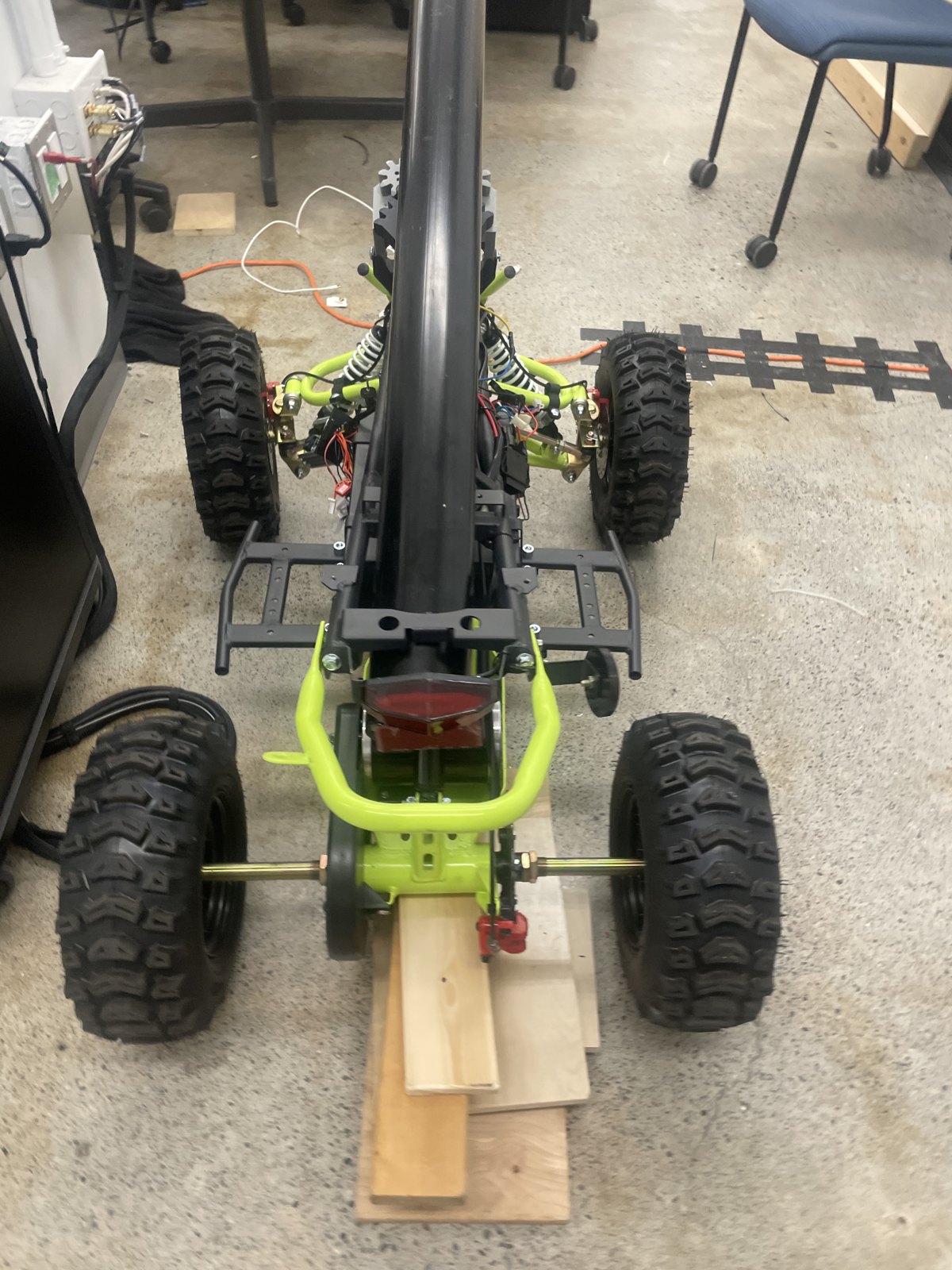
Unmanned ground vehicle
Unmanned ground vehicle — another view
Unmanned ground vehicle — hardware

Unmanned ground vehicle demo

About this project

Unmanned Ground Vehicle

One of our first products funded by our angel investment round. Helped us secure acceptance into a Canadian military program and Creative Destruction Lab, a Canadian accelerator.
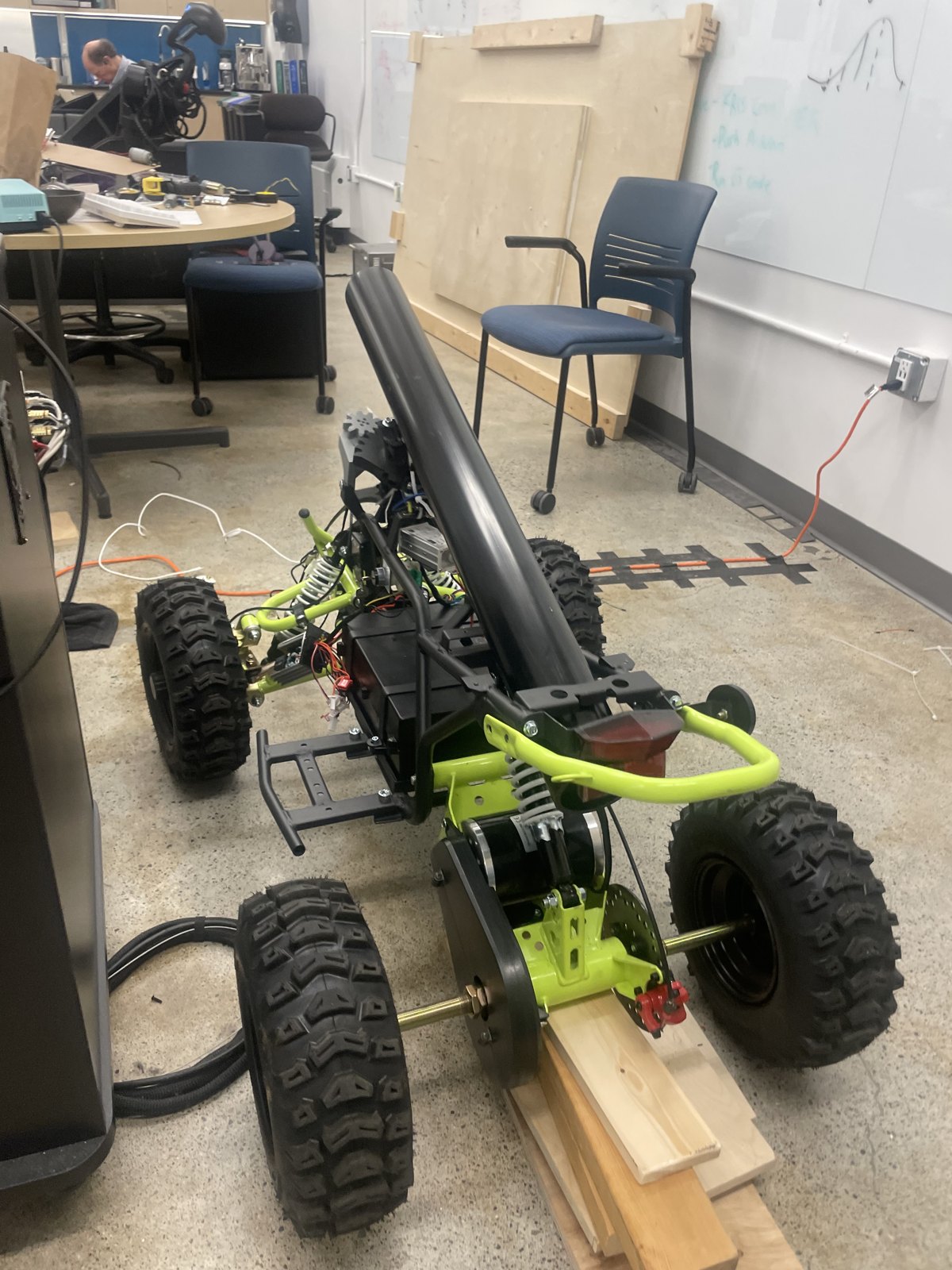
What I built

Our second product at Orex Systems. I stripped down an electric ATV and rebuilt it for remote operation. We replaced the factory controls and integrated steering, onboard computing, and a wireless control link.

Challenges

We had six days to build it. I had to learn electrical engineering on the spot. Some commercial parts couldn’t arrive in time, so we built replacements in-house. We got the drive system working. Full-system validation remains unfinished.

What I learned

Government customers don’t always have fully defined requirements. Sometimes you need to build a prototype and bring it to them. A concrete product can help clarify the need.

Results & traction

The project helped us secure acceptance into a Canadian military program and Creative Destruction Lab, a Canadian accelerator. We’re discussing a contract with the Canadian government. Nothing is confirmed or guaranteed yet. Autonomous navigation is still planned.

Bimanual Teleoperation Rig

Work at Industrial Next. We’re building a factory to close the real-to-sim-to-real gap.
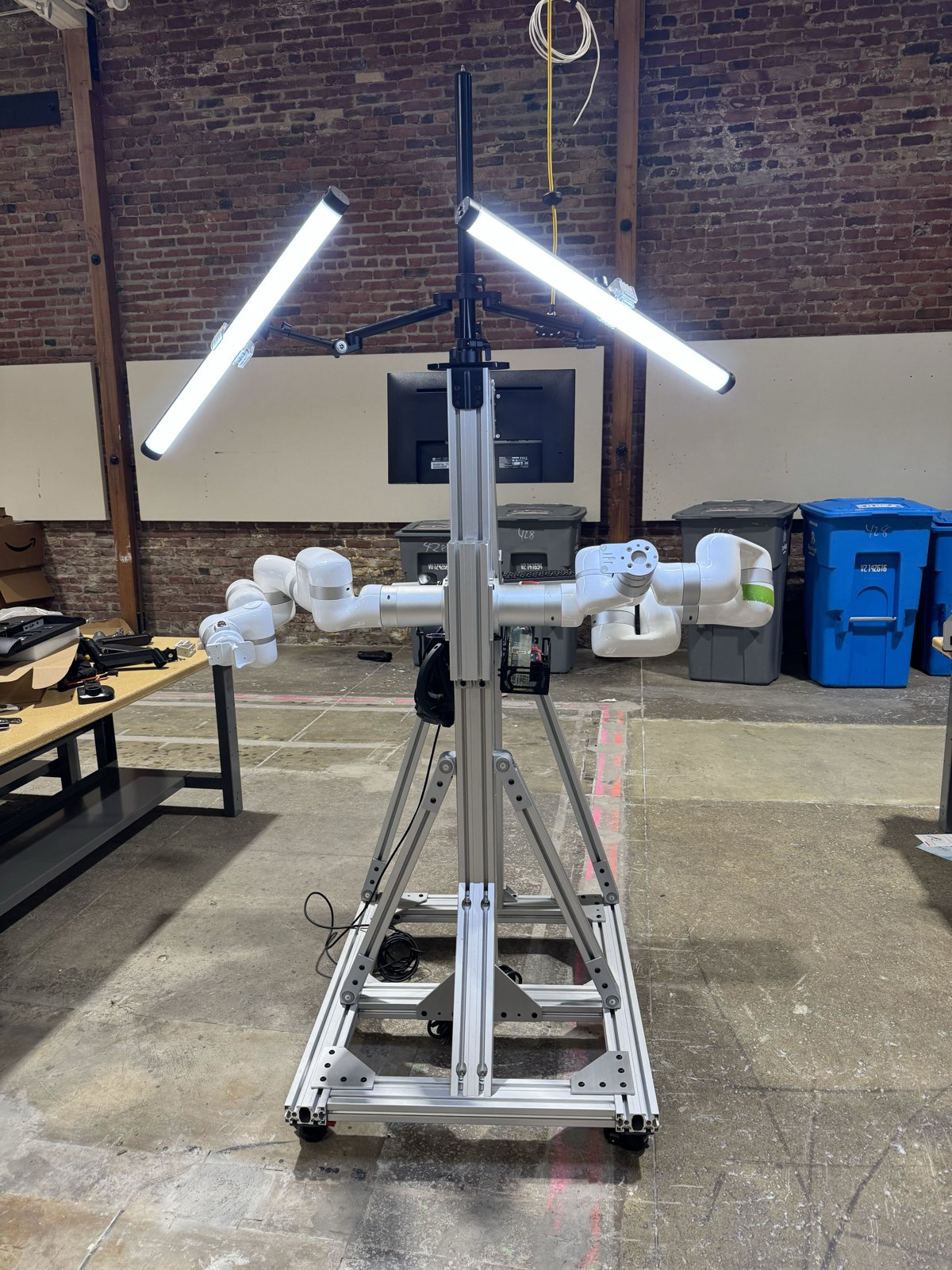
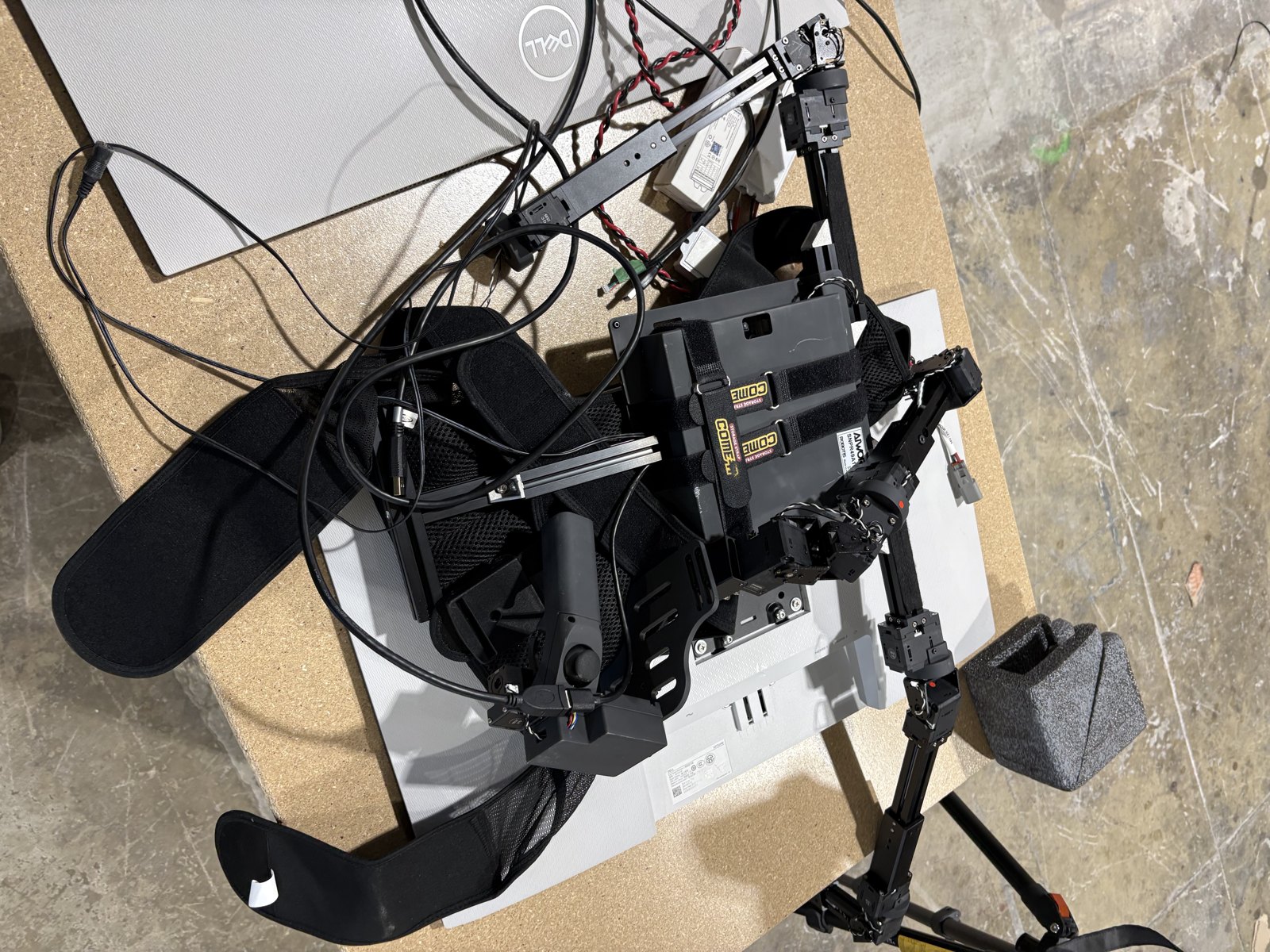
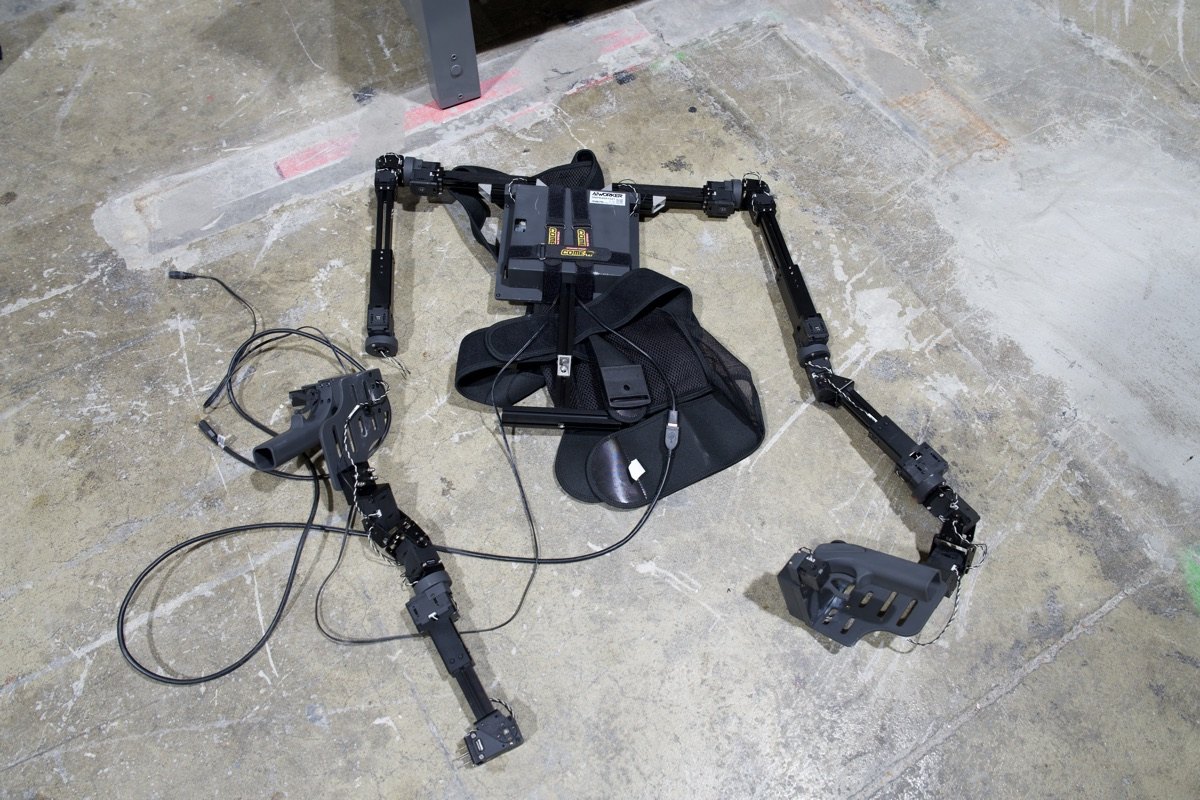
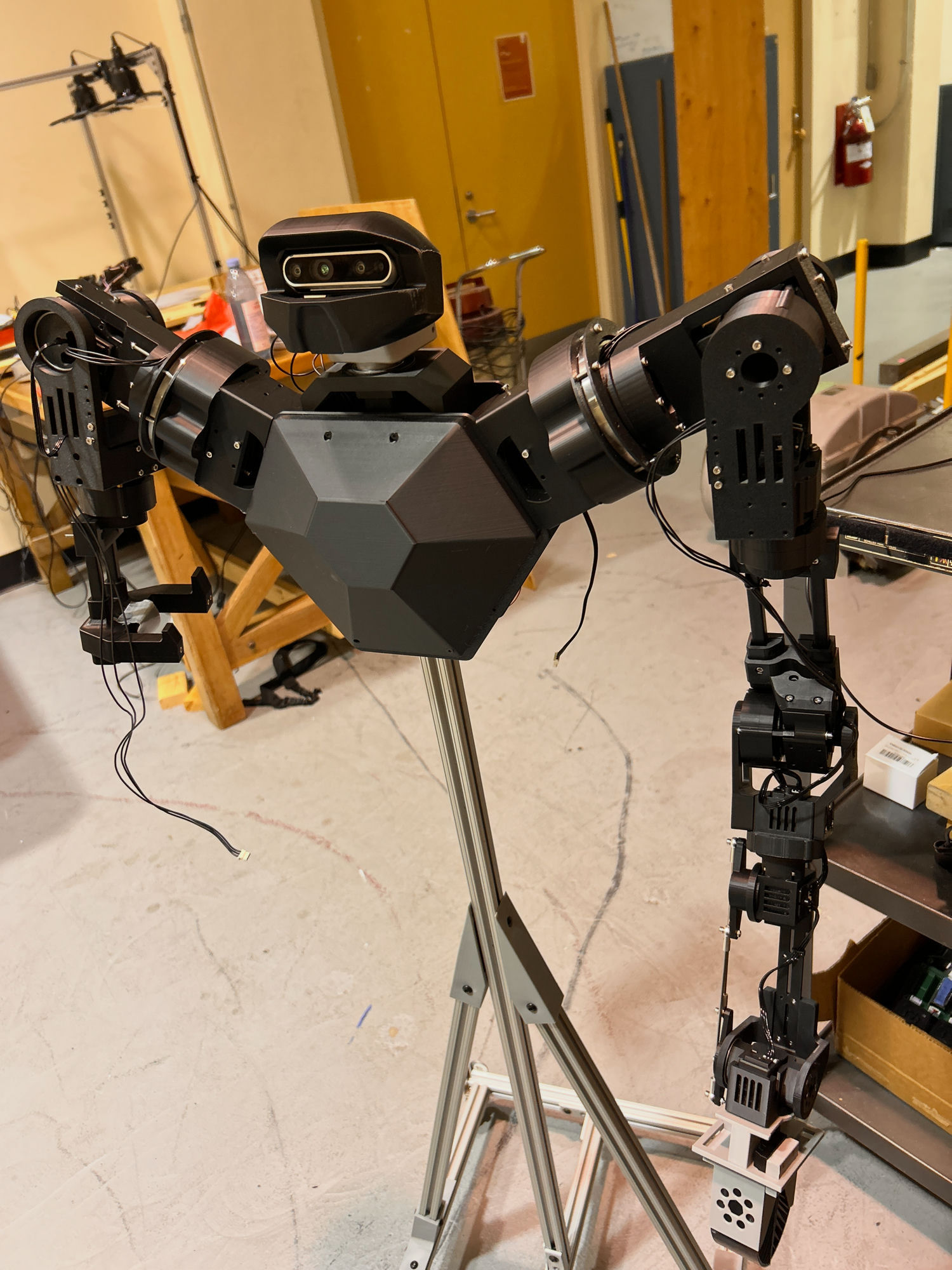
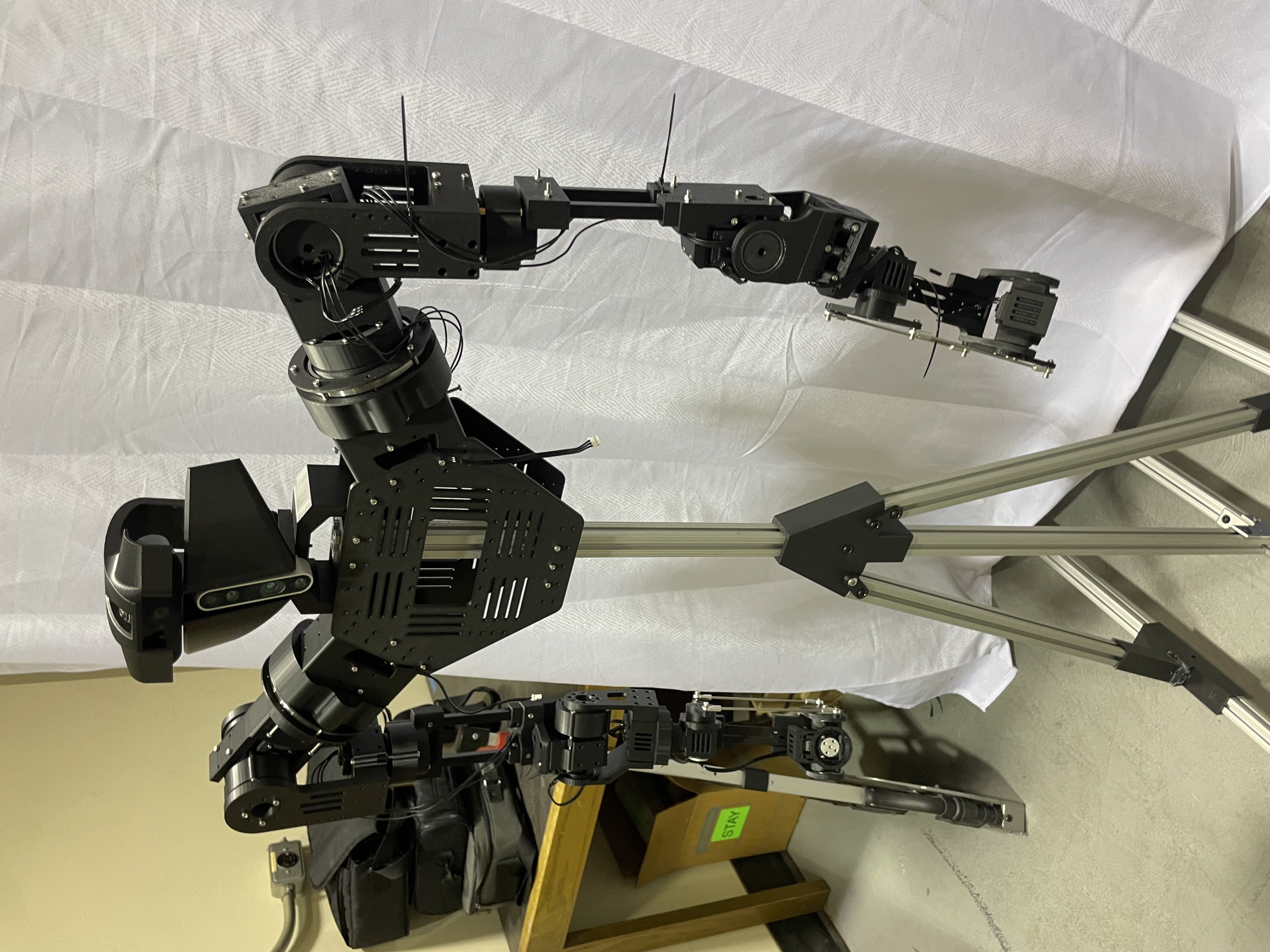
Bimanual teleoperation rig
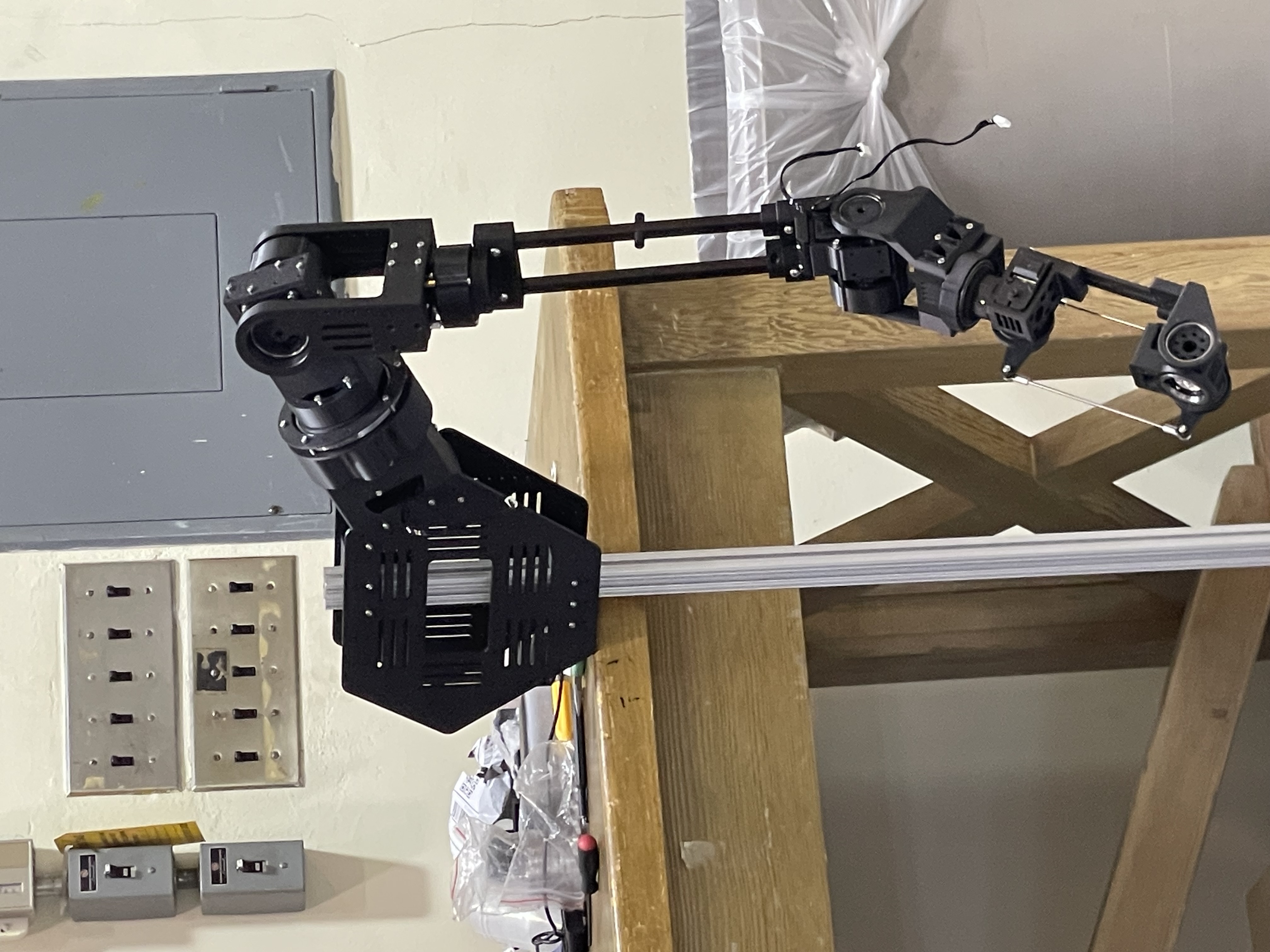
Bimanual teleoperation rig — another view

Bimanual teleoperation rig

About this project

Bimanual Teleoperation Rig

Work at Industrial Next. We’re building a factory to close the real-to-sim-to-real gap.
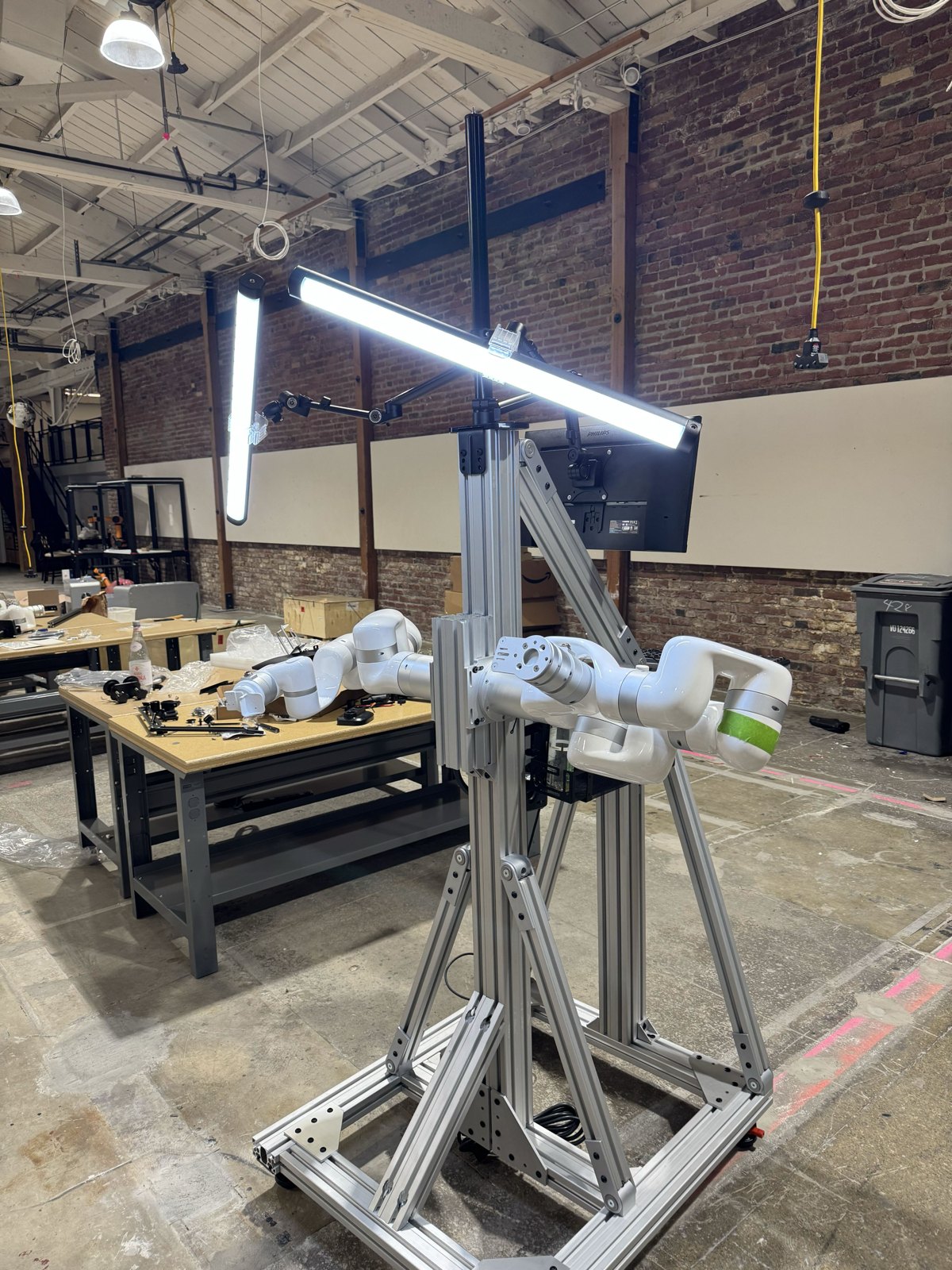
What I built

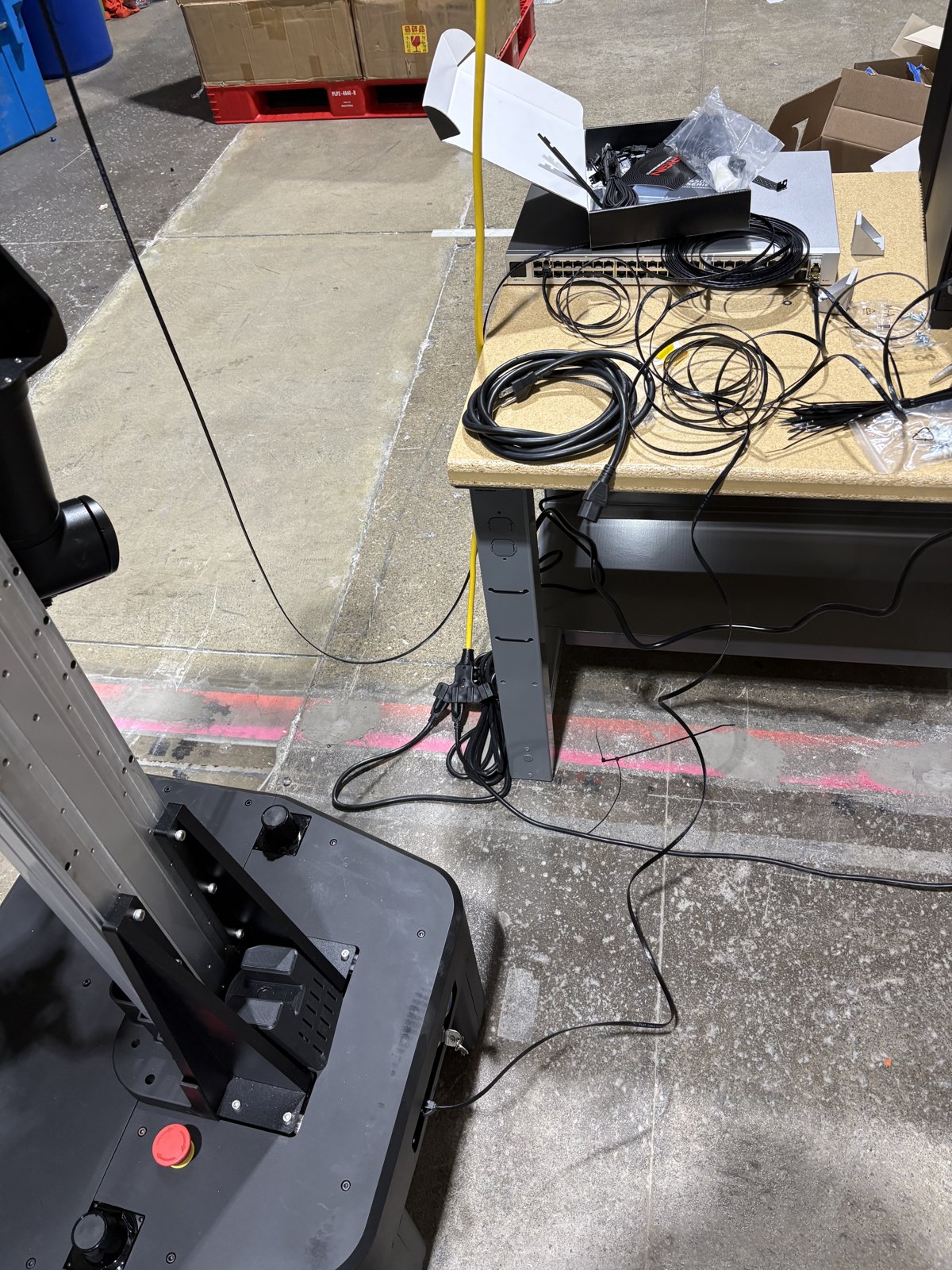
I assembled the full rig. I also handled sourcing and operations for over 13 robots arriving in pieces. I tested and provisioned PCs and control boxes.

Challenges

Managing this volume of incoming hardware was new to me. Our goal is 50 robots in the factory. Coordinating assembly, setup, and operations at that scale is a lot to manage.

What I learned

Deployment is the real measure of success. Demos are only the beginning. Getting robots set up and collecting data quickly matters. That data supports inference and useful work on the robot.

Results & traction

We have long-term partnerships with NVIDIA, World Labs, and others. Our upcoming Tech Week demo is one milestone in that work.

Robotis Humanoid

Robotis humanoid work at Industrial Next. Lab photos, teleoperation hardware, and a video journal.
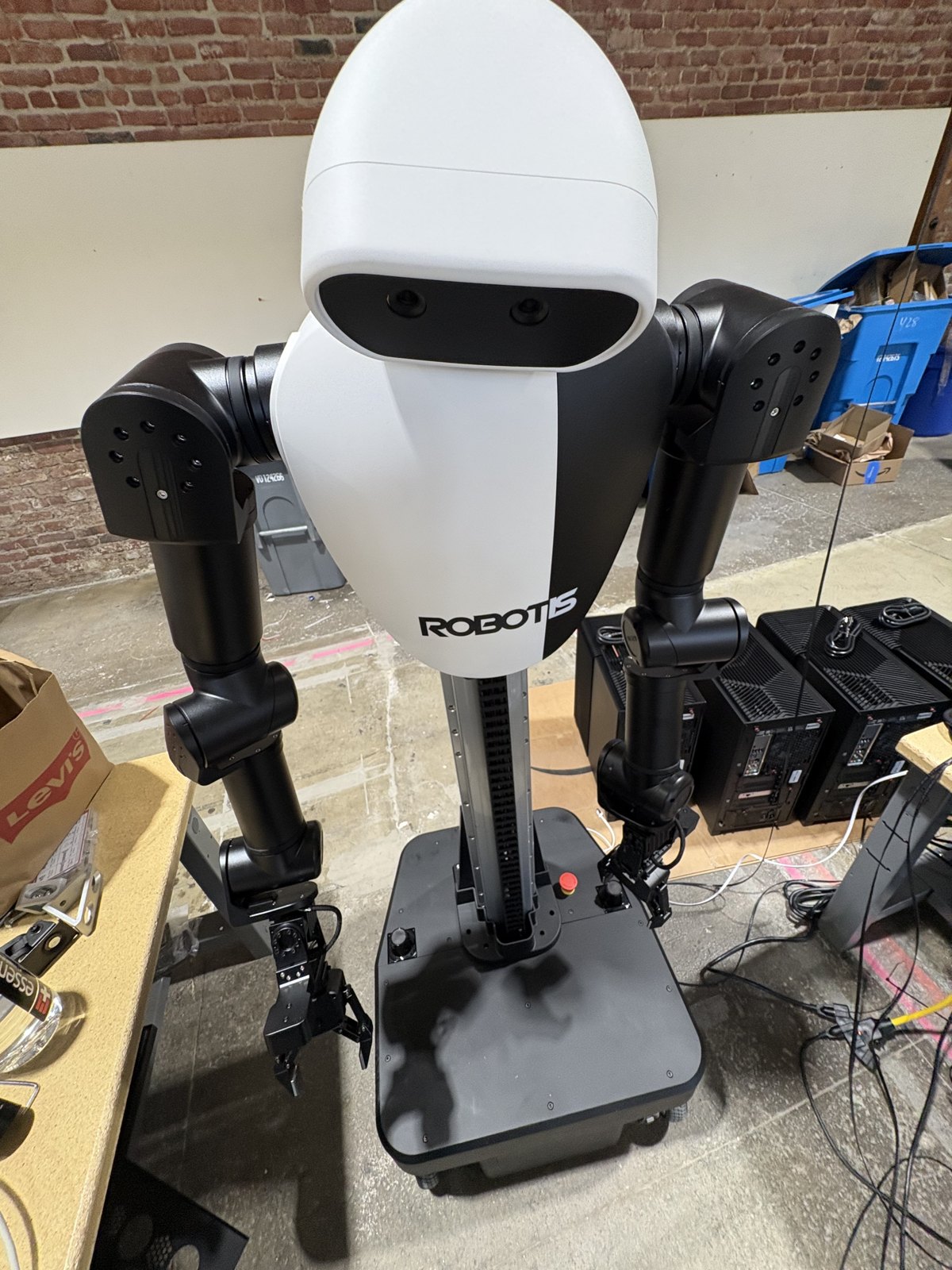
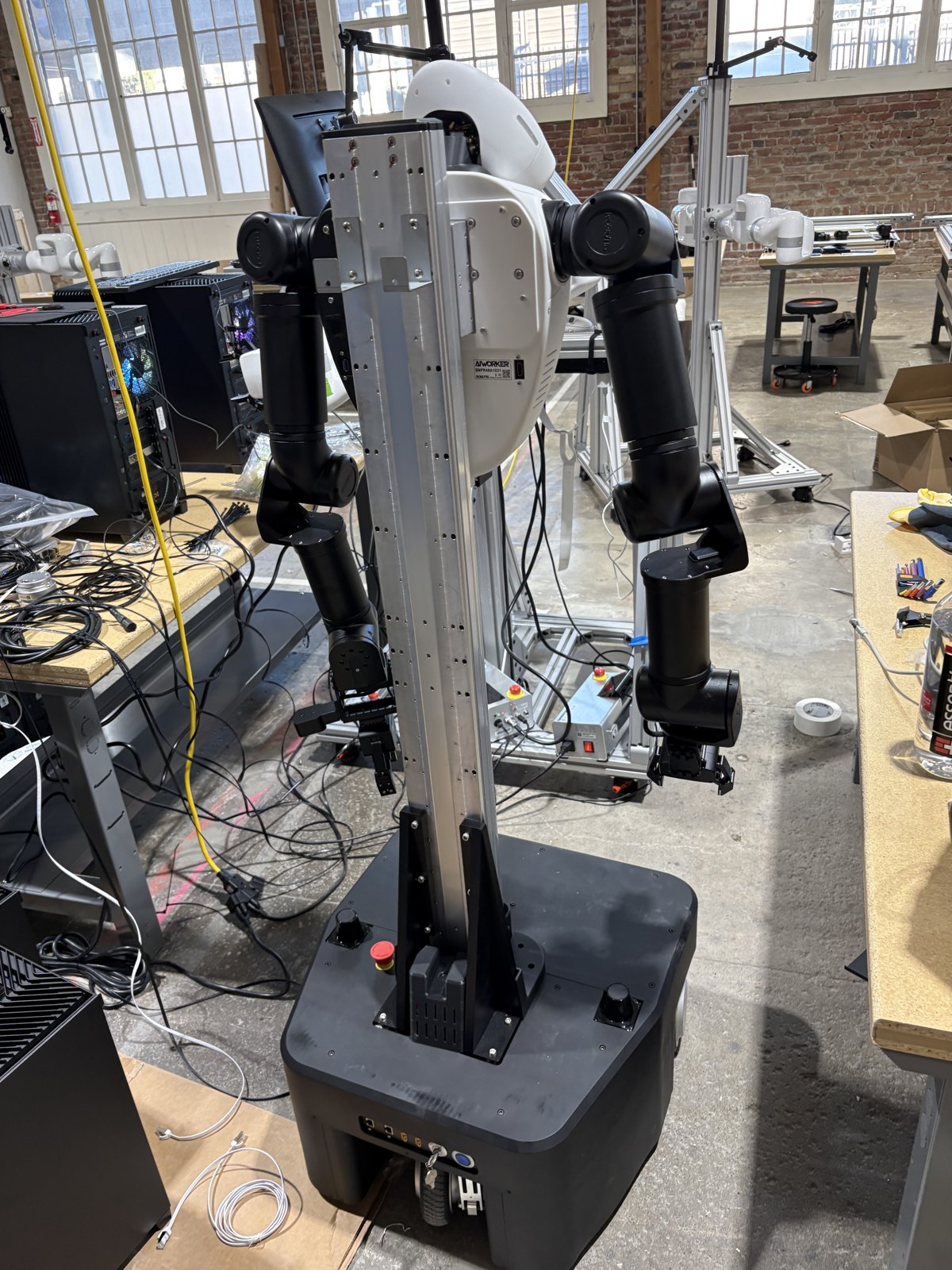
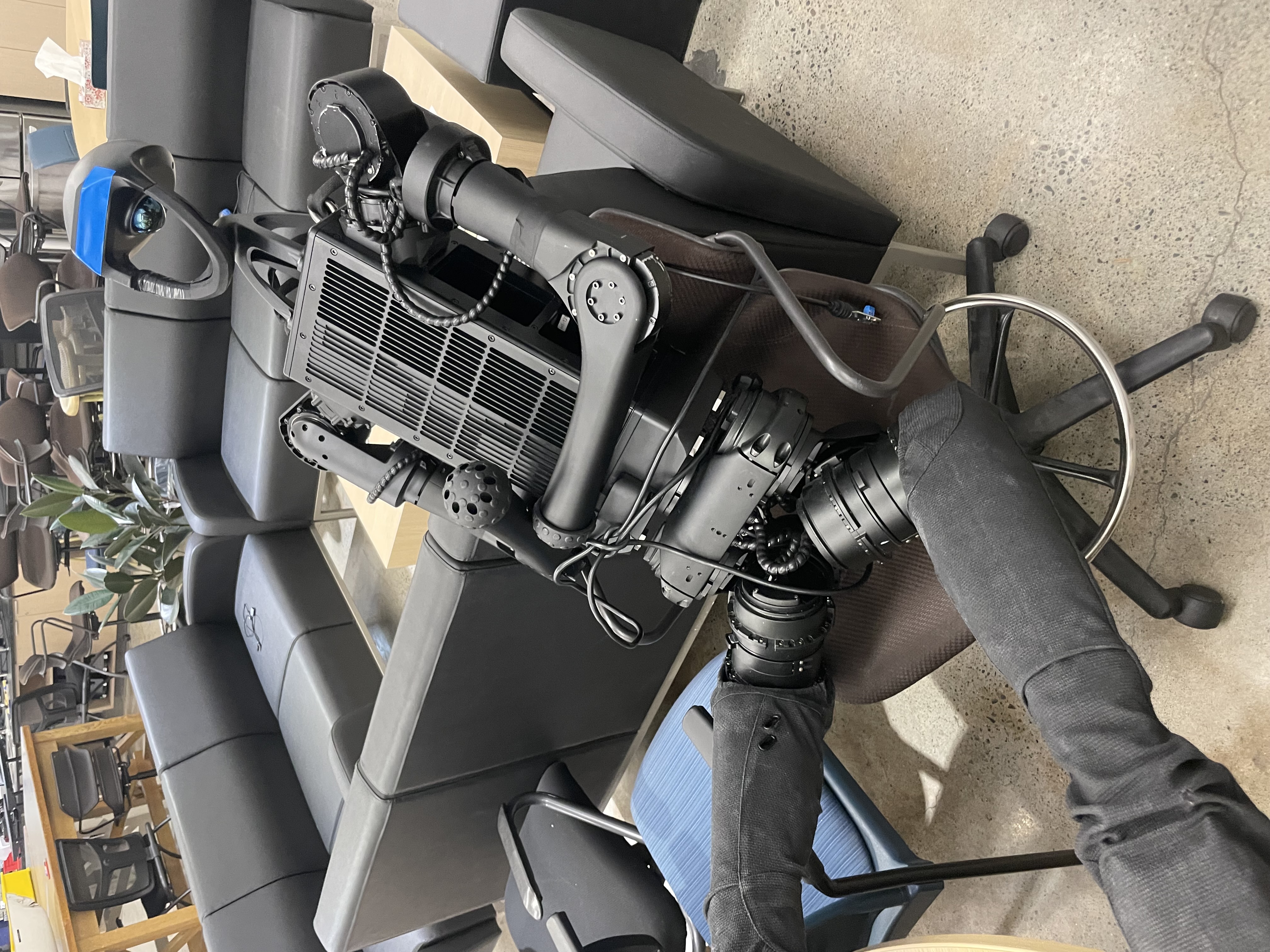
Robotis humanoid in the lab
Robotis humanoid, rear view
Robotis beside the lab workbench
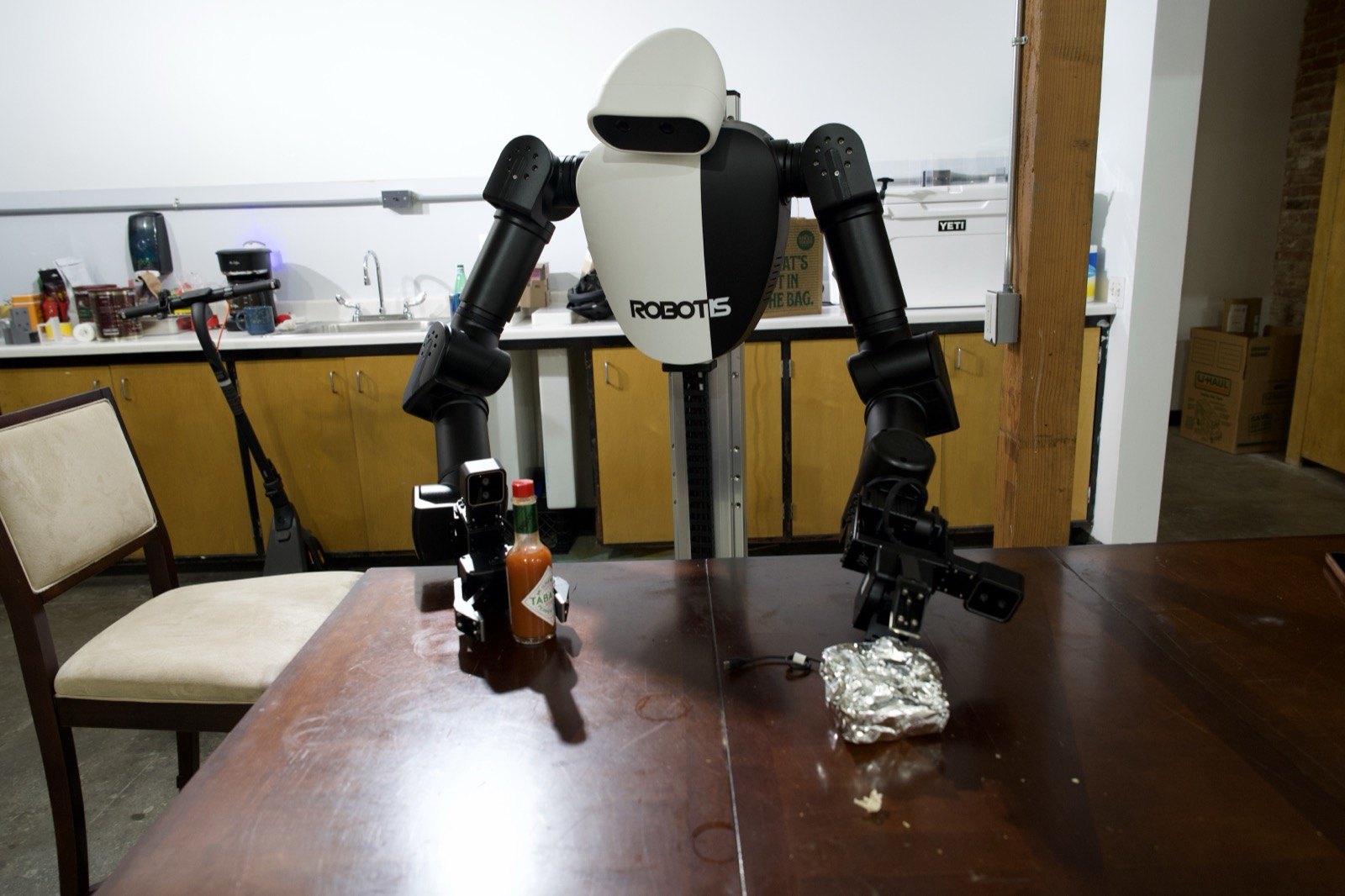
Robotis at the table
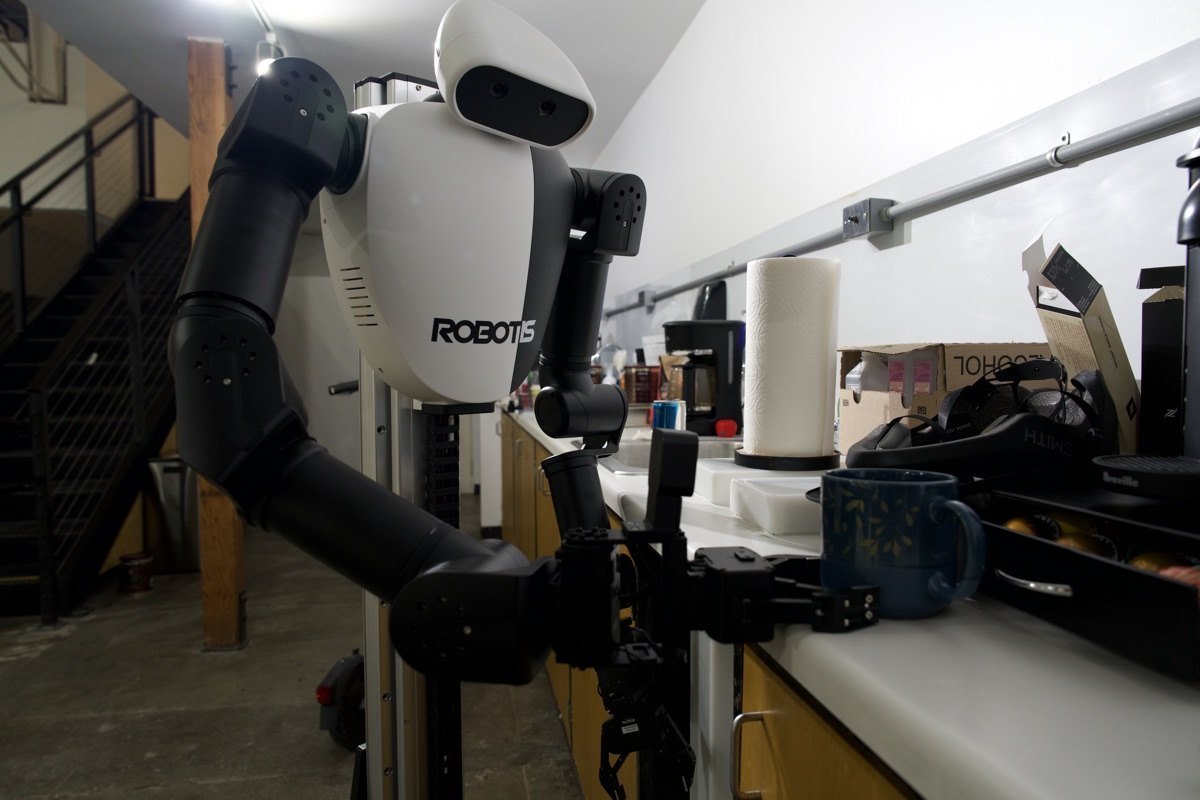
Robotis at the coffee station, front view
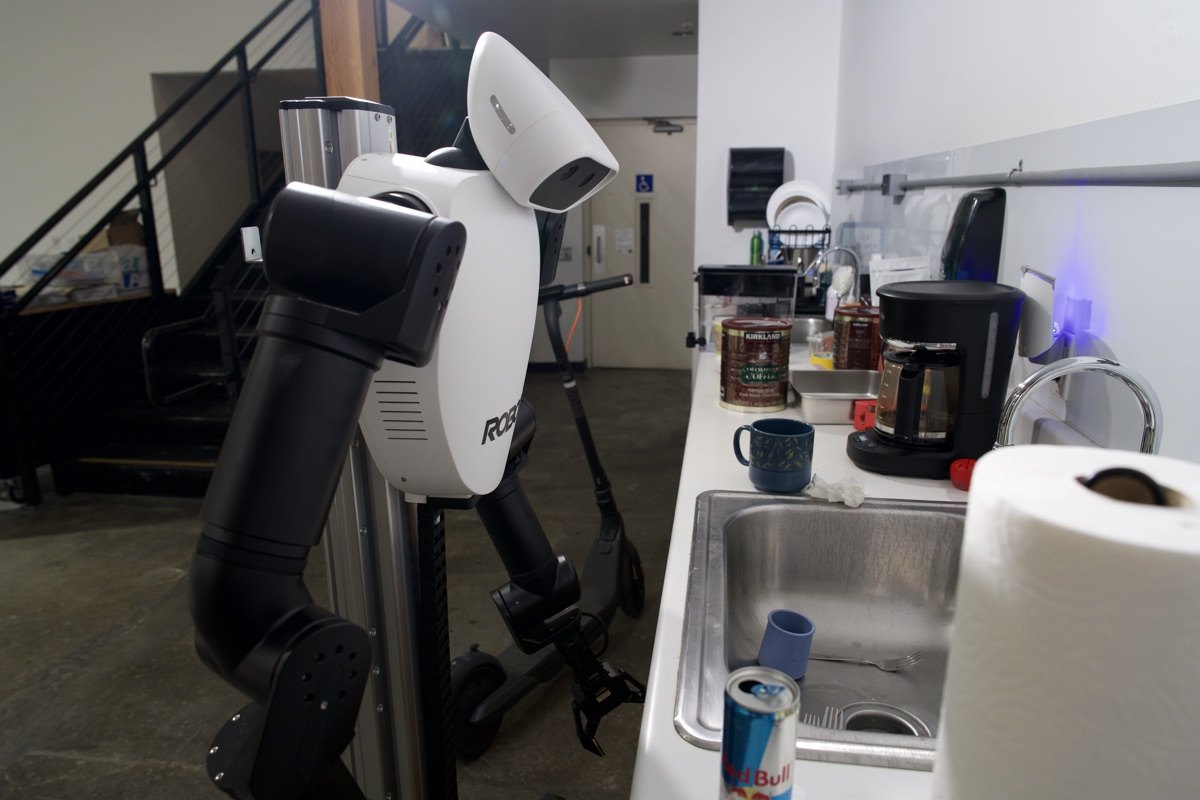
Robotis beside the sink
Teleoperation hardware
Teleoperation hardware, close-up
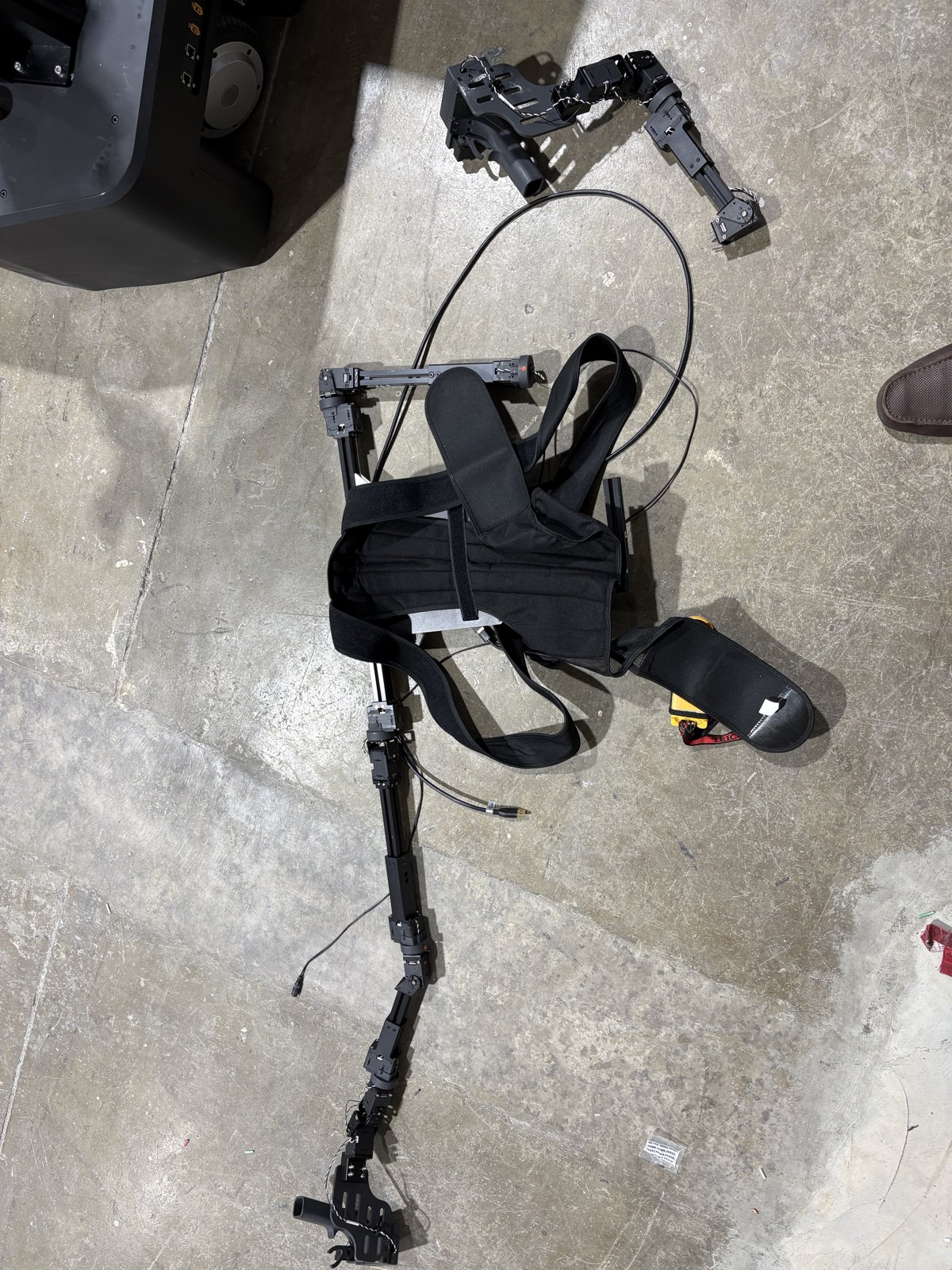
Teleoperation arms and cables
Robotis workbench and cabling

Day 1 — robotics video journal

About this project

Robotis Humanoid

Robotis humanoid work at Industrial Next. Lab photos, teleoperation hardware, and a video journal.
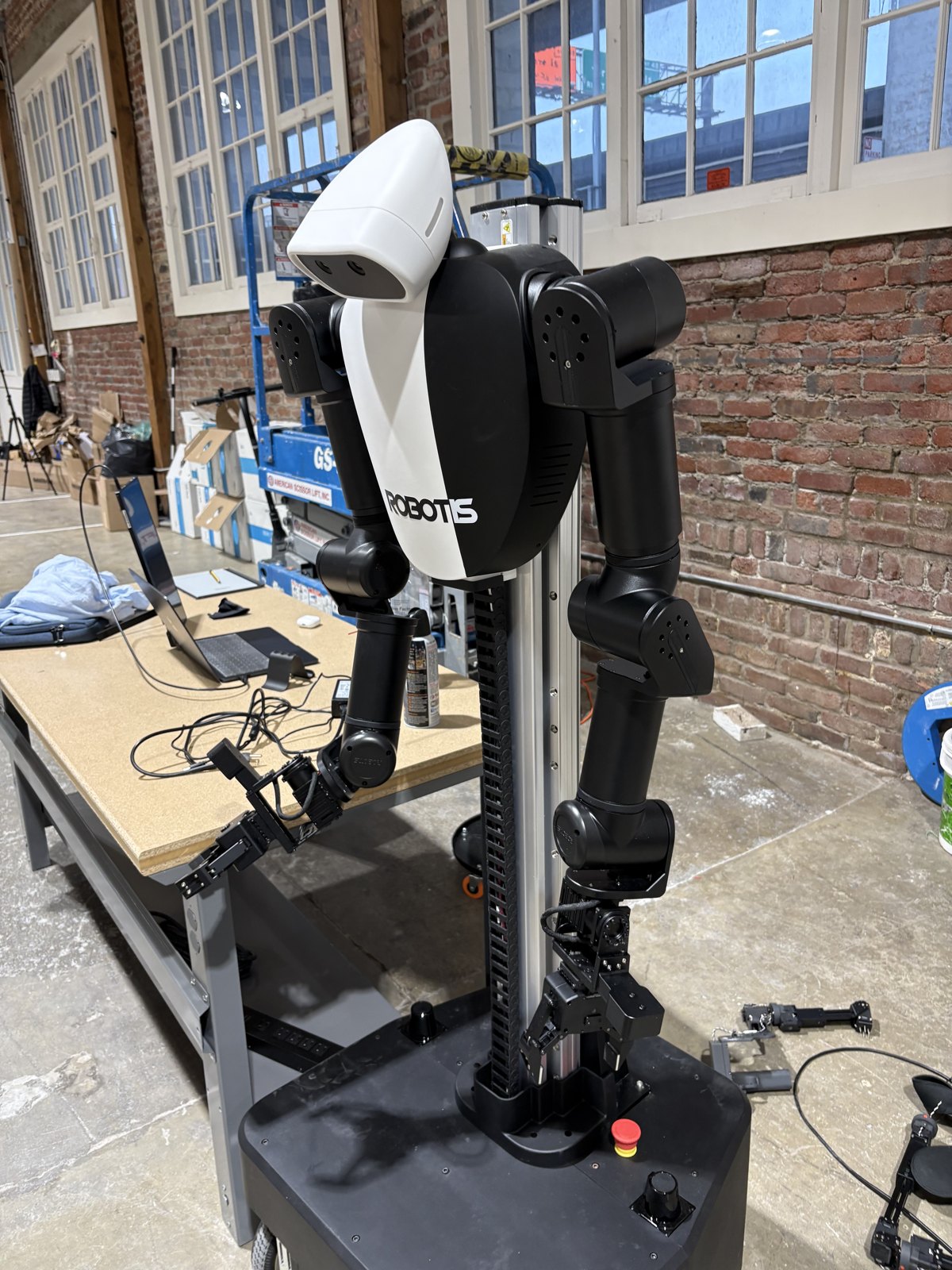
What I built

I built a VR teleoperation stack using Meta Quest. The project is still ongoing.

Challenges

The charger was missing after the move from Boston to San Francisco. I had to work around missing power hardware. This was also my first time working with a humanoid worth over US$70k.

What I learned

I learned to be resourceful. Mentorship helps me learn faster and find new opportunities. It also helps me think about funding and scaling what I want to build.

Results & traction

Documenting the project brought 20k Instagram views in two days. Development is ongoing. My goal is a robot that handles kitchen work using my own fine-tuned foundation model.

Defense-Focused Humanoid Platform

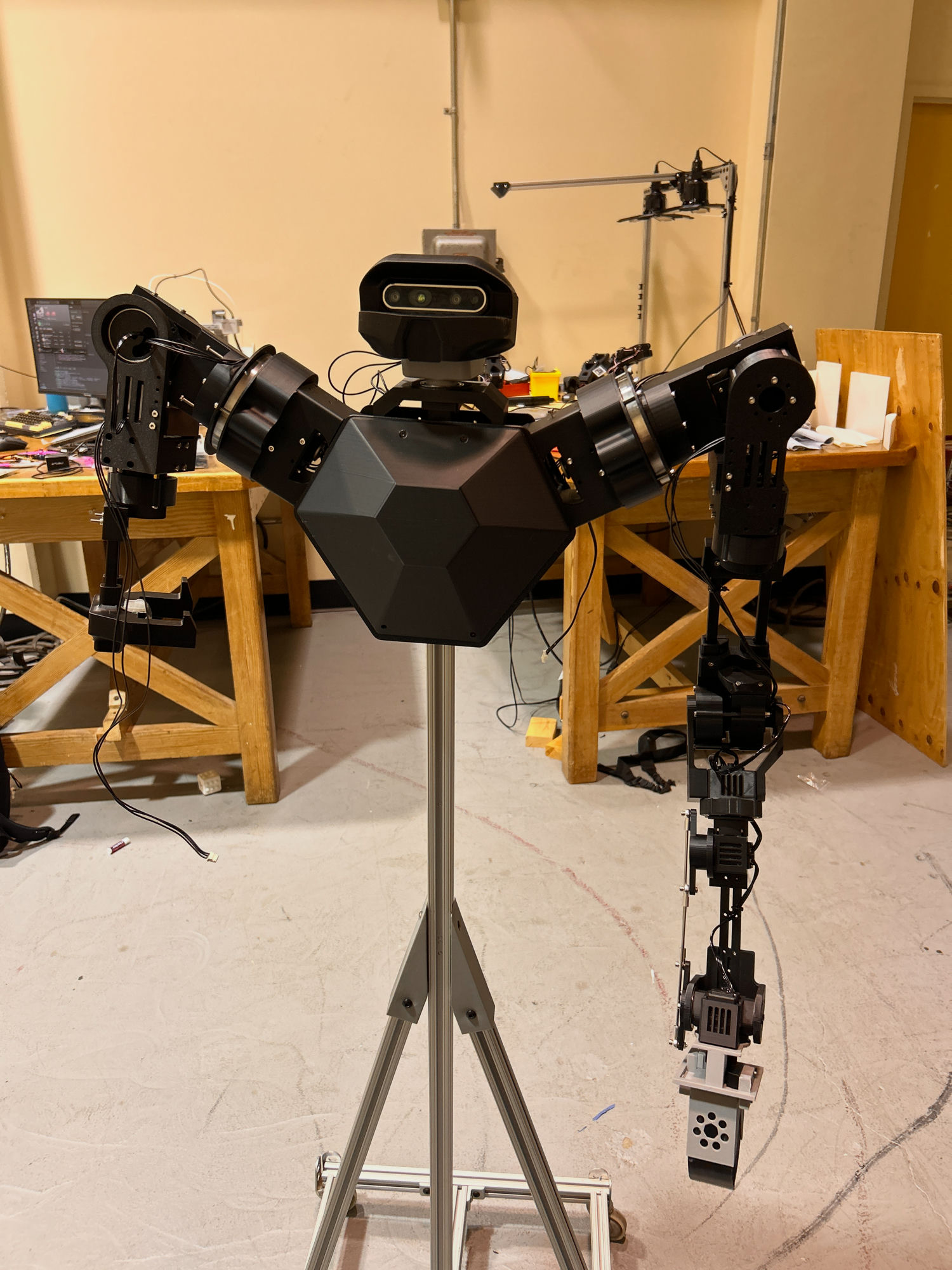
Our first product at Orex Systems. A custom-built humanoid platform for defense applications.
About this project

Defense-Focused Humanoid Platform

Our first product at Orex Systems. A custom-built humanoid platform for defense applications.
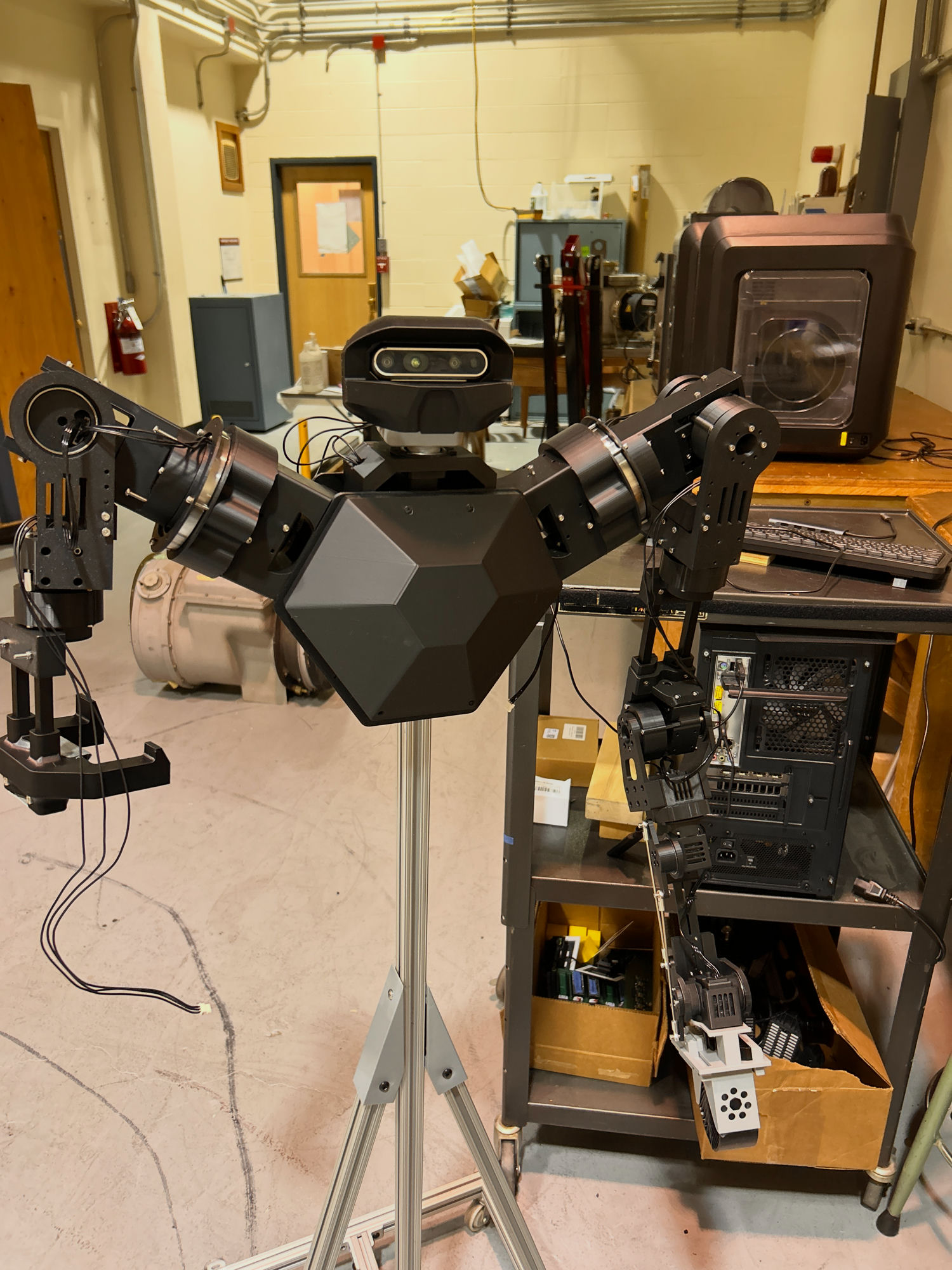
What I built

I built the humanoid end to end. The structure was fully 3D printed, with custom arms, grippers, and a head. I integrated FastSAM for visual tracking and Kalman filters for motion estimation.

Challenges

This was my first time planning for real deployment. We explored military training applications. I spoke with Canadian Special Forces operators and Department of Defense contacts for feedback. Navigating government was new to me.

What I learned

Government sales work differently from B2B. The process is more bureaucratic. I also learned to pitch investors through conversations with more than a dozen of them.

Results & traction

We demoed the platform to army regiments in Vancouver. Those connections led us to an angel investor with Canadian military ties. We raised $125k from that investor. Military contract discussions are ongoing.

Laundry Folding Robot

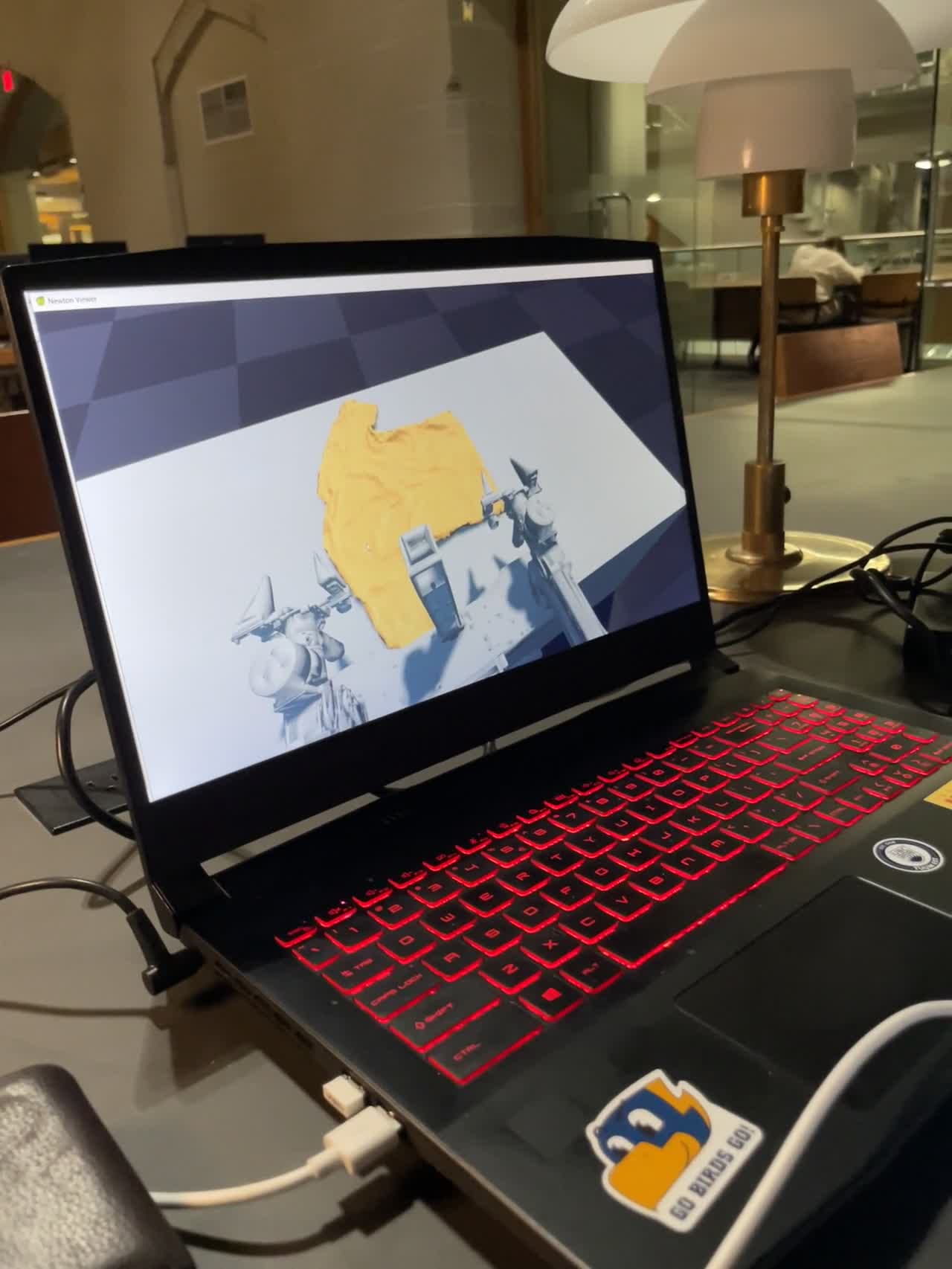
A dual-arm laundry folding robot. Built through teleoperated data collection and simulation training, then run autonomously.
About this project

Laundry Folding Robot

A dual-arm laundry folding robot. Built through teleoperated data collection and simulation training, then run autonomously.

What I built

I built a dual-arm LeRobot setup that folded my laundry. It was my first robotics project.

Challenges

I was new to robotics. I had to learn control systems, ROS 2 packages, and kinematics. I also had to understand how robotics model development differs from regular ML.

What I learned

I learned the technical foundations and explored commercial deployments. I got feedback from a Stanford SAIL researcher and several YC founders. These were my first conversations with people in the robotics industry.

Results & traction

We demoed it at the Cal Hacks AI Hackathon 2026. We didn’t win first place, but the feedback validated our direction. The technology was ambitious. The practical application wasn’t ready yet.

Touchless Clash Royale

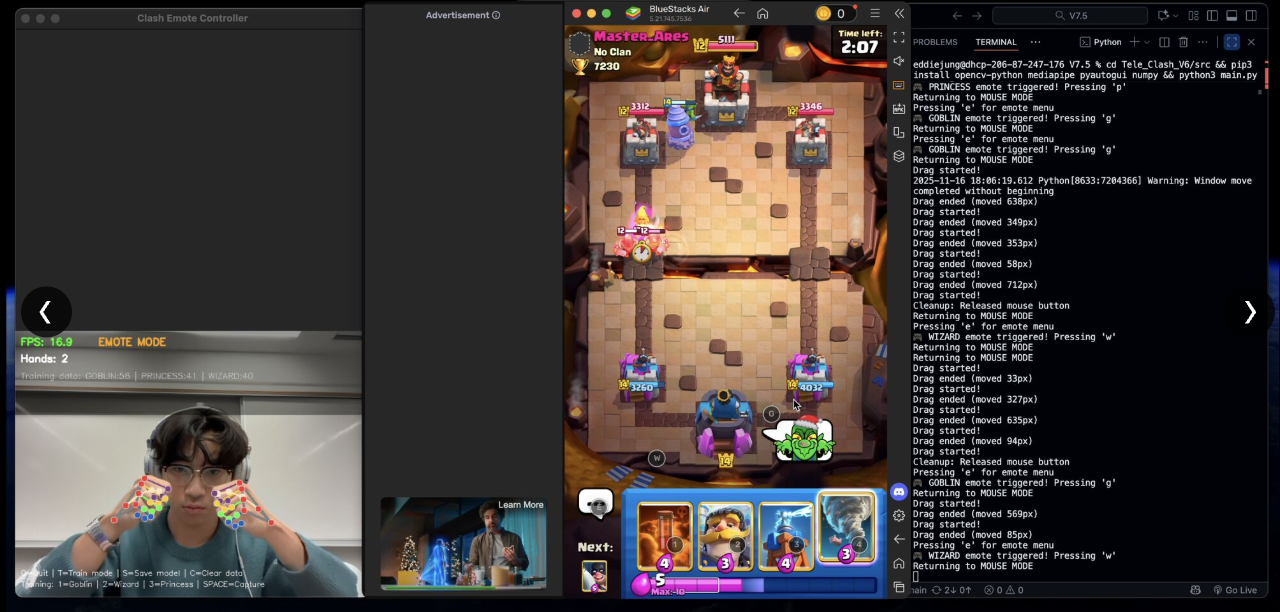
Clash Royale controlled with hand gestures. Built in one day for a hackathon.
About this project

Touchless Clash Royale

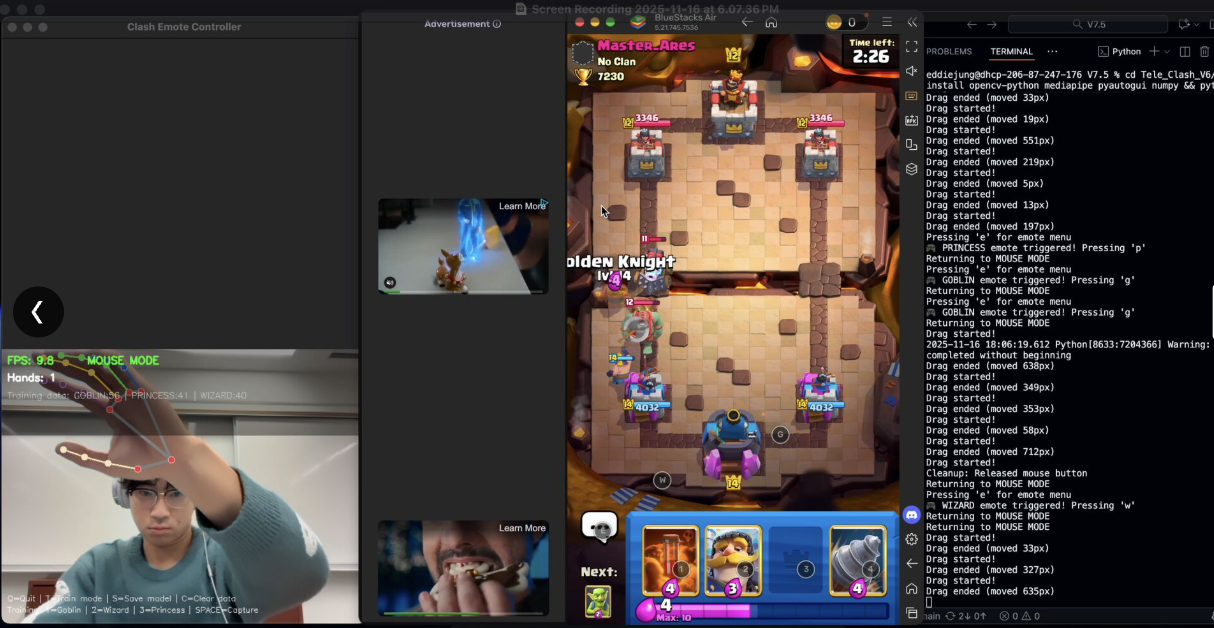
Clash Royale controlled with hand gestures. Built in one day for a hackathon.
What I built

I built a computer vision integration for Clash Royale. I’ve played the game for over a decade.

Challenges

This was my first computer vision project. I learned MediaPipe for finger tracking and used PyTorch for the first time.

What I learned

I learned model development through supervised learning. I trained a model to recognize poses and trigger in-game emotes.

Results & traction

Built in one day for a hackathon. A fun side project and an introduction to computer vision.

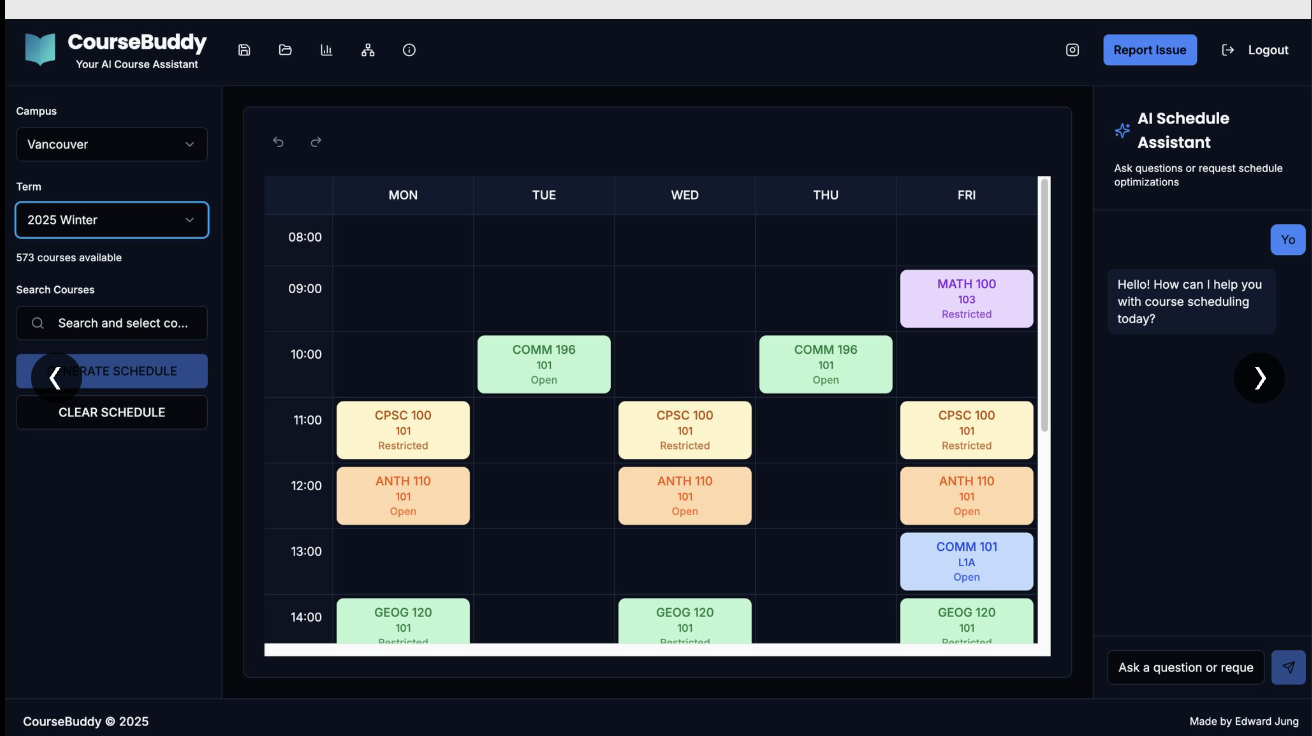
Course Buddy (10k monthly users at peak)

A Workday alternative for course scheduling at UBC.
About this project

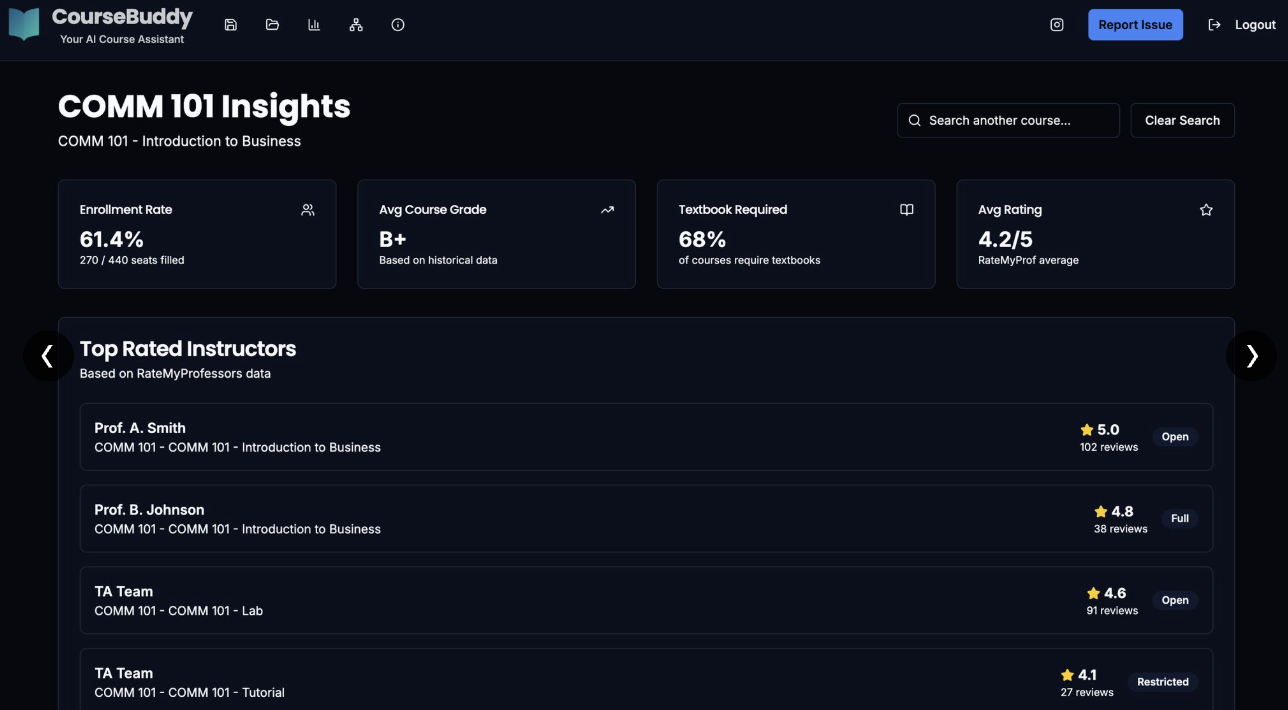
Course Buddy (10k monthly users at peak)

A Workday alternative for course scheduling at UBC.
What I built

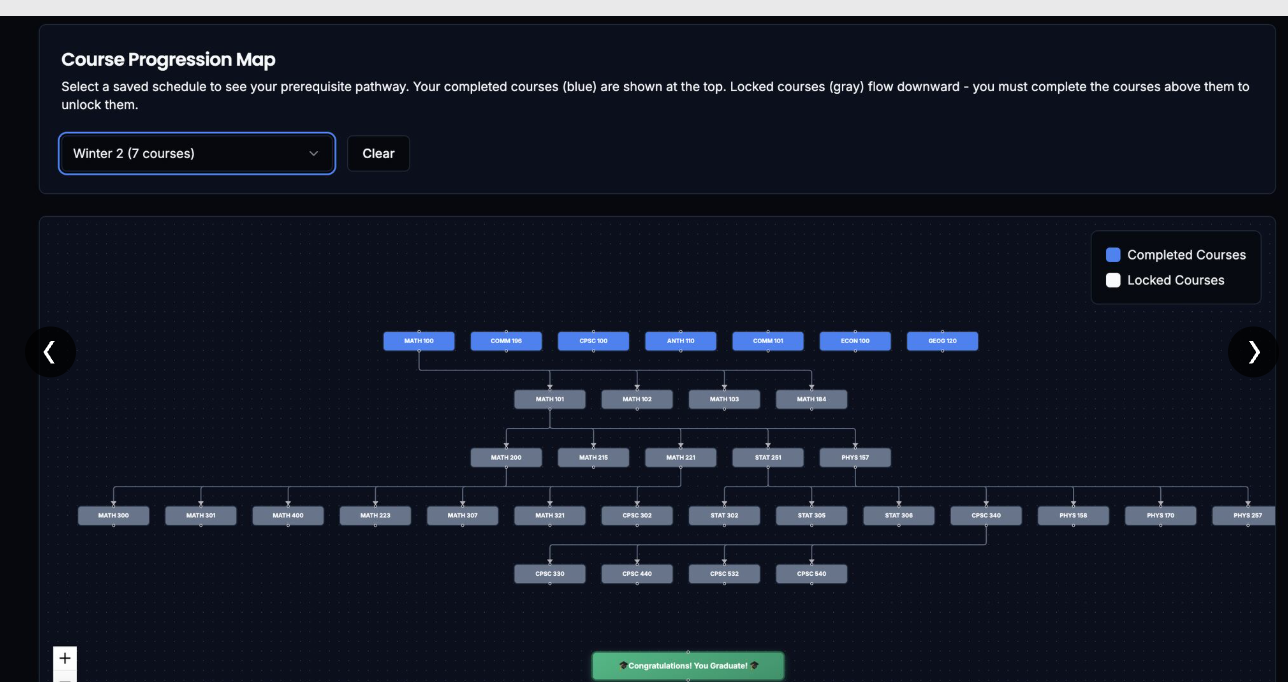
I built a Workday alternative for course scheduling at UBC. It reached 10k monthly users before Workday shut down our API access.
Challenges

Peak registration periods brought over 10k concurrent users. I learned distributed systems and rewrote the site in C++. I had to understand the code, not just rely on AI to generate it.

What I learned

I started in November 2025, two months into my first year at UBC. I learned that SaaS depends on distribution, users, and product. Writing software is only part of it.

Results & traction

Over 10k monthly users for 2.5 months. UBC’s Workday department then shut down our API access.

More to share

I may build another software product someday. Right now, I’m focused on robots.